QuickBooks for accounting. A second app for project management. A third for invoicing and vendors. A fourth for lien waivers and change orders. None of them talked to each other, and keeping them in sync cost my team hours every week and more than $10,000 a year in subscriptions.
As operations manager for my construction company, I handled estimating, invoices, payroll, and client communication, all of it spread across a patchwork of platforms.
The problem: four systems, none connected
Syncing data between the platforms was constant and slow. Updating project costs or reconciling expenses meant moving data from one system to another by hand. That created plenty of room for error and made us look unprofessional to clients when the numbers didn't match across tools.
The cost added up too. We were spending over $10,000 a year on platform licenses, money that could have gone to project expansion or equipment. A single data-transfer error could take hours to fix, and we routinely double-checked figures across every system to make sure they lined up. That slowed payment processing, held up project updates, and caused miscommunication with subcontractors and vendors. The team spent more time fixing errors than managing projects, which limited how many clients we could take on.
The fix: one platform for the whole workflow
Switching to APARBooks changed that. One platform handles estimating costs, auto-calculating expenses, generating invoices, tracking subcontracts, managing lien waivers, and more.
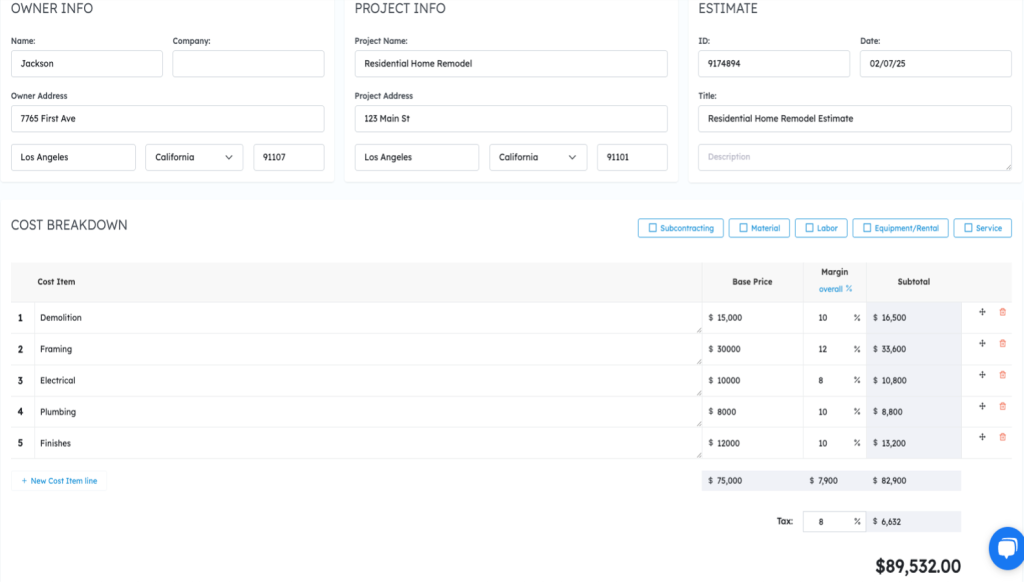
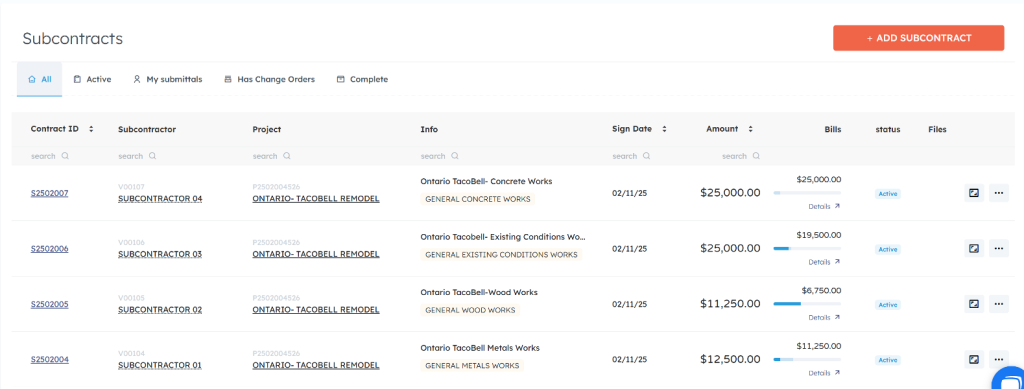
Doing all of it in one place saved us hours each week and ended the multiple subscriptions. Built-in reminders and document organization keep things under control, so we can focus on delivering projects instead of syncing data. For a small construction business, consolidating onto one construction accounting platform took a real weight off the operation.
Frequently Asked Questions
What's the problem with running separate construction software tools?
The tools don't share data, so updates and reconciliations mean manual data transfer between systems. That creates errors, inconsistent numbers in front of clients, and, in this company's case, more than $10,000 a year in overlapping subscriptions.
What does APARBooks replace?
APARBooks handles estimating, expense calculation, invoicing, subcontract tracking, and lien waiver management in one platform, so a company using separate tools for accounting, project management, invoicing, and compliance can consolidate onto one.
How much did consolidating save this company?
Hours each week that had gone to syncing data between systems, plus the more than $10,000 a year it had been paying for multiple platform licenses.
Built for Contractors. Built for Construction Accounting.
APARBooks is purpose-built construction accounting software for general contractors and bookkeepers. Manage job costing, AIA progress billing, subcontractor payments, retainage, change orders, lien compliance, and WIP reporting in one place.